Don't sign without carefully reviewing all of the terms, including release of claims, non-disparagement clauses, and confidentiality provisions. You usually have the right to consult with an attorney who can negotiate better terms on your behalf.
Injured? We Fight for What You Deserve
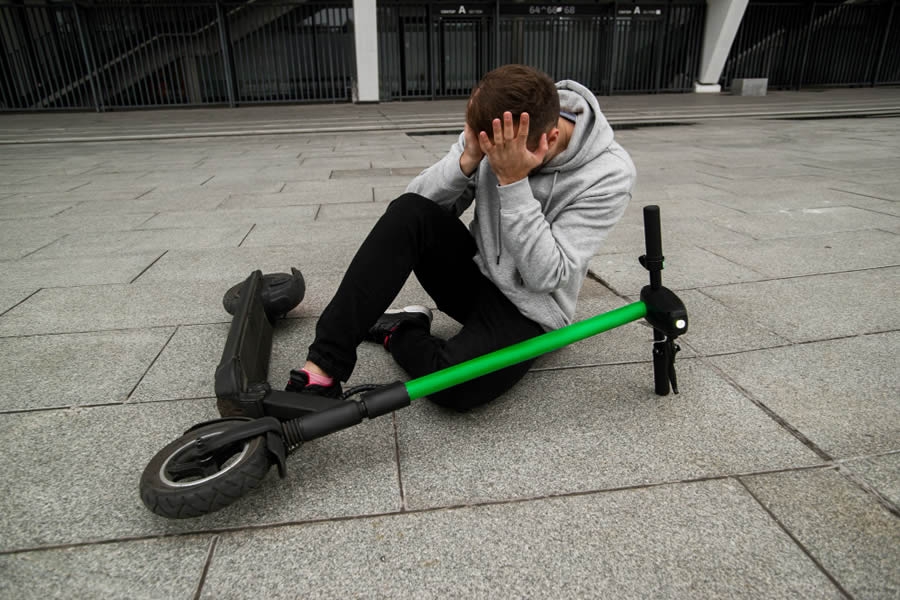
Electric scooters have turned into a popular way to get around, but the convenience comes with dangers that most riders don't consider. Whether you rent from a company or own your own scooter, you're exposed to the same traffic hazards as cyclists and don't have much protection if a driver hits you. At The Jingozian Law Group, we've seen a sharp rise in clients coming to us after scooter accidents that left them with broken bones, road rash, and head injuries. These cases can be tricky because liability might fall on the driver who hit you, the scooter company, or even the city, depending on what caused the crash. If you're looking for an electric scooter accident lawyer in Los Angeles, read more to find out who may be responsible for injuries, what challenges scooter accident claims present, and how to pursue the compensation you need to recover.
Rental scooter companies exploded across Los Angeles, and the injury statistics reflect that reality. Thousands of scooters appeared on sidewalks overnight with very little regulation and safety guidance for riders. People who had never operated a motorized vehicle suddenly found themselves zipping through traffic at fifteen miles per hour, wearing flip flops and no helmet. The infrastructure simply didn't exist to keep scooter riders safe because bike lanes are incomplete, drivers aren't trained to watch for scooters, and many riders don't understand the rules of the road. Emergency rooms across the city reported a dramatic uptick in scooter-related injuries within months of scooter services launching, and the trend has continued as more companies enter the market. The combination of inexperienced riders, distracted drivers, poorly maintained roads, and inadequate safety equipment creates a perfect storm. Experienced cyclists can get caught off guard by how differently a scooter handles, especially when braking suddenly or handling uneven pavement. The numbers are clear that scooter accidents represent a growing category of personal injury claims, and the injuries tend to be severe because there's nothing between you and the asphalt.
Determining fault in an electric scooter accident requires looking at every party that contributed to the crash, and that list can be surprisingly long. The driver who struck you is likely the most obvious defendant, and California law treats scooter riders similarly to cyclists. The scooter company might share some liability if poor maintenance or a design defect made you lose control. There have been cases where defective brakes and sudden battery shutoffs played a role in collisions. The city or county can also bear responsibility when dangerous road conditions contribute to an accident because government entities have a duty to maintain safe streets. Cracked pavement, missing signage, and poorly designed intersections have all come up in court cases. Sometimes another scooter rider or pedestrian bears some fault, and California's comparative negligence rules allow you to recover damages even if you were partially responsible. A scooter injury lawyer in Los Angeles understands these complex multi-party claims. They can investigate thoroughly before evidence disappears and witnesses forget what they saw.
The lengthy terms and conditions you scroll past before unlocking a rental scooter contain provisions that companies hope will shield them from lawsuits, but these clauses don't always hold up in court. Most rental agreements include liability waivers and mandatory arbitration clauses that are designed to prevent injured riders from filing traditional lawsuits. California courts have invalidated some of these provisions when they violate public policy or when the company was grossly negligent. The waiver you signed doesn't always protect the scooter company, especially when they knew about a defect and failed to fix it or deployed scooters in areas they knew were unsafe. An e-scooter accident attorney in Los Angeles sees companies use tactics like this to avoid responsibility through user agreements, and the same legal principles apply. We closely examine the specific language of the agreement, the circumstances of your accident, and recent court decisions to determine whether those waivers can actually bar your claim. Riders assume they don't have legal options just because they clicked agree on their phone screen, but that assumption means giving up thousands of dollars in potential compensation without looking at the full picture.
The actions you take after a scooter accident can make or break your ability to recover compensation. Call 911, even when you aren't sure if you've been hurt. Adrenaline masks pain, and internal injuries don't always show symptoms the first day. Police reports serve as an official record of the accident that documents the scene, identifies witnesses, and captures the other party's statements while the details are fresh. Photograph everything, including your injuries, the scooter, road conditions, and any vehicles involved. Get contact information from witnesses and write down your own memory of events. Go to the hospital within twenty-four hours, and follow the doctor's advice. Stay off social media when it comes to the accident because insurance adjusters will use your words against you. Contact a scooter accident lawyer in Los Angeles before accepting any settlement offer because the initial amount insurance companies propose is almost always far below what your claim is worth.
Scooter accidents leave victims with medical bills, lost wages, and pain that can last months or years, and you shouldn't have to struggle with the legal system alone. The insurance companies representing drivers and scooter corporations have teams of lawyers working to minimize what they pay you, and you need someone fighting just as hard on your side. At The Jingozian Law Group, we've built our reputation on aggressive representation and personal attention to every client who walks through our door. When you need help from an e-scooter accident attorney in Los Angeles, call us today for a case evaluation.
At The Jingozian Law Group, P.C., we fight for your rights in personal injury and employment law. See what our clients say about working with us.
Manny Jingozian assisted me with my lawsuit case, and I couldn't be happier with the experience. He is professional, caring, knowledgeable, and has excellent communication skills. Manny consistently keeps you updated on the case, which I really appreciated. Working with Manny was a pleasure, and I would definitely recommend him to others.
Mr. Jingozian stands out as one of the most knowledgeable, professional, and honest attorneys I have ever encountered. He exceeded our expectations by securing a settlement well beyond what we thought possible. He maintained excellent communication, keeping us updated every step of the way and remaining readily available for calls. The entire experience was positive and stress-free, we couldn't be more satisfied and highly recommend him without hesitation!
I had a great experience with Manny , Their professionalism truly stands out, and their communication is excellent. They were always very attentive and made themselves available whenever I had questions, which gave me a lot of peace of mind throughout the process. What impressed me the most is how detail oriented they are always thinking ahead and staying one step ahead at all times. You can tell they genuinely care about their clients and the outcome. Highly recommend.
Don't sign without carefully reviewing all of the terms, including release of claims, non-disparagement clauses, and confidentiality provisions. You usually have the right to consult with an attorney who can negotiate better terms on your behalf.
Enforceability varies dramatically by state, with some banning them entirely and others enforcing them when reasonable in scope and duration. Recent legal trends have moved toward limiting these agreements. Having an attorney review your specific agreement is essential.
Most discrimination claims must first be filed with the Equal Employment Opportunity Commission or your state's equivalent agency before pursuing a lawsuit. Strict deadlines apply, often within one hundred eighty to three hundred days of the discriminatory act.
Misclassification occurs when employers label workers as contractors to avoid providing benefits owed to employees. The determination depends on factors like company control over your work, schedule flexibility, and who provides tools and equipment.
Numerous federal and state laws protect employees who report illegal activity, safety violations, or fraud from employer retaliation. Whistleblowers may be entitled to reinstatement, back pay, and other remedies if they face adverse employment actions.
Generally speaking, employers have some flexibility to modify duties and compensation, but they can't make any changes that violate contracts, discriminate, or constitute retaliation. Sudden changes following a complaint or protected activity may raise legal concerns.
A hostile work environment exists when unwelcome conduct based on a protected characteristic is pervasive or severe enough to create an intimidating or abusive workplace. This goes beyond occasional rudeness and must materially affect your ability to do your job.
Under the Fair Labor Standards Act, the majority of employees working more than forty hours per week must receive overtime pay at one and a half times their regular rate. However, certain exemptions apply based on salary level and job duties, which employers sometimes misapply.
Wrongful termination happens if an employee is fired in a way that violates federal or state laws, employment contracts, or public policy. Examples include being fired due to discrimination, retaliation for whistleblowing, or refusing to engage in illegal activities.
Federal and state law prohibit employers from retaliating against employees who report illegal conduct or file discrimination complaints. Retaliation can include termination, demotion, or creating a hostile environment. If you experience retaliation, you may have an additional legal claim.
Document every incident in detail. That includes dates, times, witnesses, and what occurred. Report the harassment through your company's internal complaint process and keep copies of all communications. If internal channels don't resolve the issue, consulting with an attorney is an important next step.
Workplace discrimination occurs when an employer treats someone unfavorably because of a protected characteristic like race, gender, age, religion, disability, or national origin. This can include hiring and firing decisions, promotions, pay, job assignments, and harassment.
If your health insurance paid for any treatment that's related to your injury, they may have a right to reimbursement from any settlement through a process called subrogation. Your attorney can often negotiate these liens down to maximize what you keep.
A settlement is an agreement that is reached outside of the court, where the at-fault party agrees to pay compensation in exchange for releasing liability. A verdict is a decision that's made by a judge or jury after a trial determines the outcome.
While you can represent yourself, insurance companies often take advantage of unrepresented claimants with lowball settlements. Studies show that injured individuals who hire attorneys recover significantly more compensation even after paying legal fees.
The timeline varies depending on the complexity of your case, the severity of injuries, and whether it settles or goes to trial. Simpler cases may resolve in a few months, while complex litigation can take several years.
You may still have options, including your own uninsured or underinsured motorist coverage if the incident involved a vehicle. An experienced attorney can identify all of the potential sources of compensation available to you.
Fault is normally established by examining evidence like police reports, medical records, witness statements, and expert testimony. Your attorney will investigate the circumstances to build a compelling case. In some states, you may still recover damages even if you were partially at fault.
First, get medical attention even if you feel okay, as some injuries don't show symptoms right away. Document everything, including photos of the scene and witness contact information, and avoid giving recorded statements to insurance companies before talking to an attorney.
Most personal injury cases are settled out of court via negotiations with insurance companies or the opposing party. However, if a fair settlement cannot be reached, taking your case to trial may be necessary to obtain the compensation you deserve.
Victims can recover damages for medical expenses, lost wages, emotional distress, pain, and suffering or loss of enjoyment of life. In cases involving egregious conduct, punitive damages may also be available to punish the wrongdoer.
Every state has a statute of limitations that sets a deadline for filing personal injury lawsuits, typically ranging from one to four years depending on where you live. Missing this deadline almost always means losing your right to pursue compensation, so consult with an attorney as soon as possible after your injury.
A personal injury case is when someone suffers harm because another party was negligent, reckless, or engaged in intentional misconduct. A few examples include car accidents, slip and falls, medical malpractice, and workplace injuries. If someone else's actions led to your injury, you may have grounds for a claim.